Publications




Kelemen Fruzsina › 2022 › Pages: 205--219The sermons written for the first Sunday after the epiphany, according to the medieval order of the pericopes, are based on the story of 12-year-old Jesus teaching in the temple (Luke 2:41-52). Therefore, the duties of parents and children are usually presented in these sermons. A following of this pericopal tradition can be found among 16th-century Hungarian publications in the books of the pastors Péter Bornemisza, István Beythe and György Kulcsár, and the priest Miklós Telegdi. Through their sermons, I examine how these authors wrote about the ‘good’ and…
Research article › Varia, Other › igehirdetés (prédikáció), keresztelés, gyermek
Sebestyén Ádám › 2022 › Pages: 185--203My study focuses on the various apocalyptic calculations in the fifth postil written by Péter Bornemisza. According to the theologians of the magisterial Reformation, the exact time of the end cannot be calculated because only God knows this, as the Gospels clearly state it. Although Bornemisza accepts this doctrine too, he shares some assumptions about the approximate time of the second coming in a sermon of his postil. As my study demonstrates, Bornemisza follows the treatise of the German theologian Andreas Osiander (Coniecturae de ultimis temporibus ac de fine mundi…
Research article › Varia, Other › igehirdetés (prédikáció), eszkatológia
Maczák Ibolya › 2022 › Pages: 175--184Although István Beythe (1532-1612) is usually remembered for his botanical works, his main achievement is his four-part sermon collection (Németújvár, 1584). The first volume contains the Sunday gospels, the second the apostolic epistles he based his lessons on, the third includes excerpts from the Gospel used on feast days of the saints, and the fourth the explanation of the epistles dedicated to the main holidays. My study is about the genre and structural characteristics of these writings, with special emphasis on the denominational lessons of the book on the feasts of the…
Research article › Varia, Other › igehirdetés (prédikáció)
Varga Benjámin › 2022 › Pages: 19--174In his 1583 ritual entitled Agendarius, which was innovative in many respects in comparison to its Hungarian predecessors, Bishop Miklós Telegdi of Pécs, the administrator of the diocese of Esztergom, added sample-like sermons to the rituals of the administration of the sacraments accompanying the great turning points of life (viz. baptism, confirmation, wedding etc.). He was presumably guided chiefly by pastoral considerations. For the second edition of 1596 (published after Telegdi’s death), the editors added a second funeral sermon, clearly intended for a…
Research article › Varia, Other › igehirdetés (prédikáció), unitárius prédikáció, temetési prédikáció
Lenyó Orsolya › 2022 › Pages: 123--158Miklós Telegdi, a Roman Catholic bishop of the reformation period, was an important figure of his generation. The confessional guide of his Agendarius, first published in 1583 in nagyszombat (Trnava, now in Slovakia), is particular as to its structure and content. in Hungary, this is the first penitential guide that was written in a unique style, including vernacular parts and containing exhortations in a large number. The confessional includes a text discussing the strict obligation on the seal of confession as well as a confession mirror which, according to…
Research article › Varia, Other › unitárius egyház, római katolikus egyház, reformáció, magyar reformáció, Pécs, gyónás
Szigeti Molnár Dávid › 2022 › Pages: 101--122My study approaches Unitarian sermon literature from the perspective of church discipline. There are several reasons for this: 1) Historical records of reception are scarce because in the early modern age, only a handful of Unitarian sermons could be published. 2) it was uncommon among Unitarian preachers to use theoretical works (ars concionandi/praedicandi) until the end of the 17th century, they learned instead by observing the written and oral practices of their colleagues. 3) Because of the medium of the manuscript, most early modern Unitarian sermons did…
Research article › Varia, Other › unitárius egyház, igehirdetés (prédikáció), unitárius prédikáció
Simon József › 2022 › Pages: 87--100Although György Enyedi’s (1555-1597) posthumous exegetical masterpiece Explicationes (Cluj, 1598) did not contain any explicit statements on political thinking, his Hungarian sermons testify his theoretical interest towards political philosophy. The paper focuses on sermons 67, 68 and 184, wherein Enyedi formulates his version of natural law. Due to his antitrinitarian theological presuppositions and his philosophical anthropology deeply inherent in the former, Enyedi’s position does not match fully the standard versions of natural law of his time. on the one…
Research article › Varia, Other › igehirdetés (prédikáció), természeti vallásosság, természetjog, unitárius egyház
Varga Réka › 2022 › Pages: 77--86The Disputation of Pécs (Pécsi Disputa) by György Válaszúti is a unique segment of 16th-century antitrinitarian literature. Since pécs was occupied by the Ottoman empire, Christians had to live by strict rules. They had to live outside the city walls, and they could only use one church. The dispute is a chronicle of a religious debate between the reformed citizens of tolna and the antitrinitarian citizens of Pécs.
Although the literature has not reached a consensus yet, we can be quite sure that the debate had a…
Research article › Varia, Other › igehirdetés (prédikáció), antitrinitarizmus, unitárius egyház, Pécs
Kovács Sándor › 2022 › Pages: 63--75Francis David’s selected sermons were published by the printing press of Alba Iulia (Gyulafehérvár) in 1569. These sermons are structured in an almost identical way: biblical text, brief summary, lessons and the proper sermon. most of the sermons, which adhered very strictly to the explanation of the text, were probably preached in the court of John Sigismund, prince of Transylvania, while others at services and workshops for priests who came to the religious disputes. As modern readers, we might posit the likelihood that bishop Francis David held training courses for pastors to…
Research article › Church history, Varia, Other › igehirdetés (prédikáció), unitárius egyház, erdélyi unitárius egyház
Lovas Borbála › 2022 › Pages: 27--61Francis David, or Ferenc Dávid, the first bishop of the Transylvanian Unitarian church, produced the only printed sermon collection published by the Unitarians in the 16th and 17th centuries. This folio-sized volume has an interesting publication history as it accompanied the most important Unitarian publications of the early period, such as Rövid magyarázat (Short explanation) and Rövid útmutatás (Short guide), De falsa et vera, Brevis enarratio,…
Research article › Varia, Other › unitárius egyház, igehirdetés (prédikáció)
Balázs Mihály › 2022 › Pages: 9--26In this study, I examine the works of ars praedicandi as used by the Unitarians. The paper focuses on the Unitarian use of the works of Bartholomaeus Keckermann, who attributed an important role to the exordium. The paper further registers an 18th-century Unitarian reader of Keckermann’s rhetoric, found in a composite volume in the Library of the Cluj-Napoca Branch of the Romanian Academy. This work’s earlier impact can also be studied in a Unitarian manuscript revision created as early as in 1653. There is another Unitarian work (Ms. U. 262) on sermon making from this period, a part of…
Research article › Varia, Other › igehirdetés (prédikáció), unitárius egyház, antitrinitarizmus
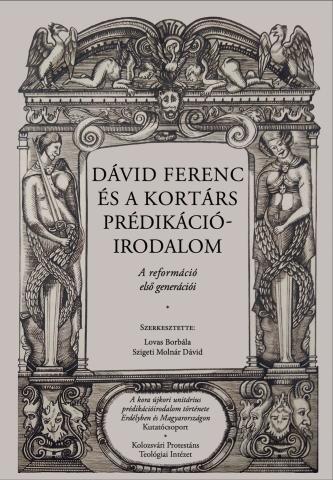
Lovas Borbála, Szigeti Molnár Dávid › 2022 › Pages: 254A kora újkori unitárius prédikációirodalom története Erdélyben és Magyarországon Kutatócsoport és a Kolozsvári Protestáns Teológiai Intézet 2021. április 30-án konferenciát szervezett Budapesten, az Eötvös Loránd Tudományegyetemen, melynek témája a korai reformátorokhoz kapcsolódó prédikációk és a prédikációtörténet vizsgálata volt. Az alapvetően Erdélyre és Magyarországra, valamint a magyar nyelvű prédikációs anyagra koncentráló konferencia a 16. századi prédikációkkal kapcsolatban vizsgálta unitárius, katolikus, lutheránus és református prédikátorok, kötetek, korpuszok, kéziratos és…
Collection of studies › Church history, Varia, Other › unitárius egyház, unitárius egyháztörténet, igehirdetés (prédikáció)
Balogh Csaba › 2022 › Pages: 216--220Essay › Old Testament, New Testament, Varia, General theology › köszöntés
Lucski Márta › 2022 › Pages: 201--203Review › Church history, Varia, General theology › ébredési mozgalom